
A carbon monoxide detector can only protect you if it is in the right place. Mount it too low, and a slow CO leak may never register. Put it too close to a furnace or drafty window, and you invite false alarms. Place it on the wrong side of a bedroom, and the sound may not wake you in time.
This guide covers carbon monoxide detector placement height, the wall-vs-ceiling debate, room-by-room rules, and the most common installation mistakes. If you are buying a new detector or checking the ones you already own, this is the checklist that determines whether they work.
Why carbon monoxide detector placement height matters
Carbon monoxide is slightly lighter than air at room temperature, but only slightly. When CO comes from a fuel-burning source, it is usually warm and rises, mixing with room air as it travels. That means it does not pool neatly at the floor or ceiling the way propane or gasoline vapor does.
Because CO mixes so readily, the most important placement rule is not "as high as possible." It is breathing-zone coverage. A detector needs to be where you and your family actually breathe, close to the rooms where people sleep, and away from spots that distort readings.
The height still matters, though. A detector mounted at ankle height or hidden behind furniture responds later than one at breathing height. A detector on the ceiling can work well, but only if it is not in a dead-air corner or pushed into a vaulted peak where air stratifies.
The official rule: wall or ceiling
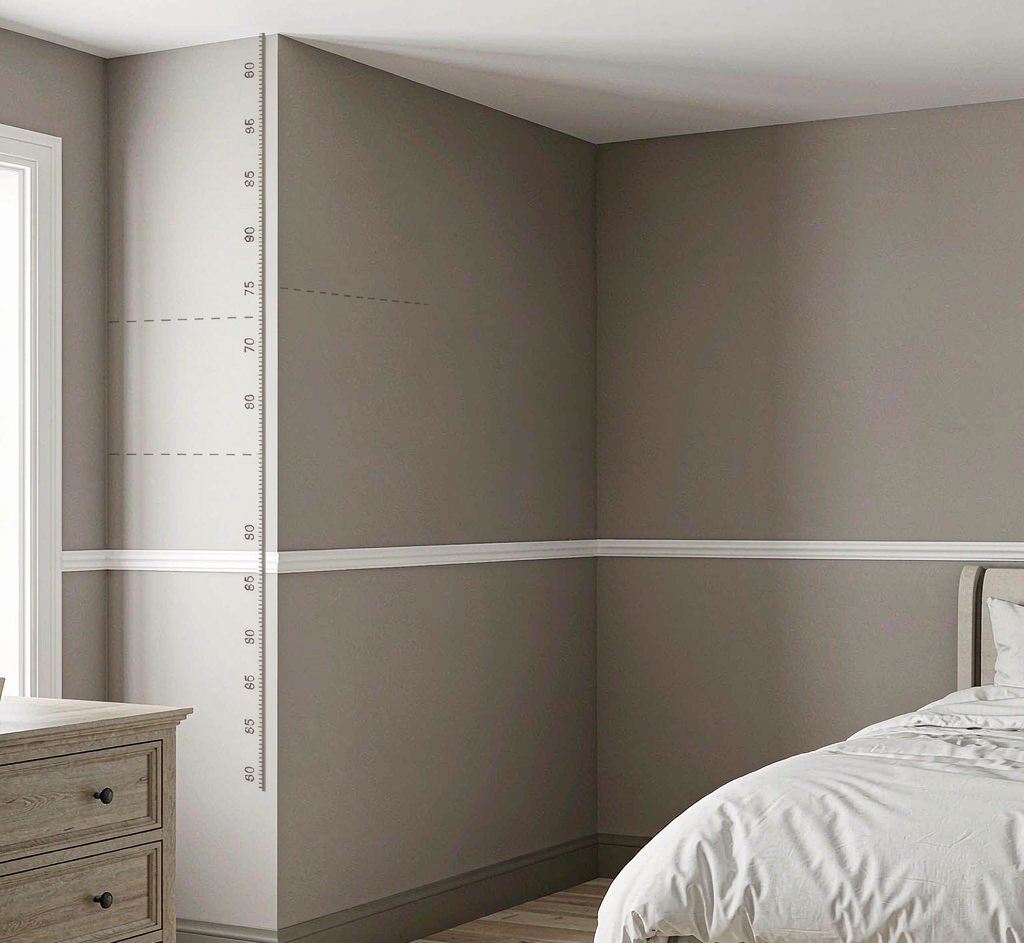
NFPA 720 and manufacturer instructions agree on one basic principle: install a carbon monoxide detector on a wall at least five feet above the floor, or on the ceiling.
The five-foot wall height is the breathing zone for most adults and children. It is high enough to catch warm, rising CO early, but not so high that the sensor sits in slow-moving air near the ceiling.
Ceiling mounting is also acceptable. Smoke-CO combination units almost always recommend ceiling placement because smoke rises faster than CO. A combo unit on the ceiling watches both threats from a single vantage point. For a dedicated CO detector, ceiling mounting is fine as long as it is at least twelve inches from any wall and away from ceiling fans, vents, and skylights.
| Location | Height | Best for |
|---|---|---|
| Wall | 5 feet above floor (about eye level) | Dedicated CO detectors, easy battery swaps, clear digital readout |
| Ceiling | Center of ceiling, 12+ inches from walls | Combo smoke/CO units, open rooms, hallways |
| Outlet height | 1–2 feet above floor | Plug-in units only; mount is dictated by outlet, so verify it is still effective |
If your only option is a plug-in detector, choose a wall outlet that is reasonably close to the recommended zone. Many modern plug-in models also include a digital display and battery backup, so they remain useful even if the outlet is not in the ideal spot.
Wall vs ceiling: what changes in practice
Both wall and ceiling locations are valid, but the trade-offs are real.
Wall mounting at five feet is the easiest to reach for testing and cleaning. It is also where most plug-in models naturally sit if the outlet is at standard height. A digital display is easier to read at eye level than on a ceiling. If you have pets or small children, five feet keeps the unit out of reach without requiring a ladder.
Ceiling mounting gives the earliest warning when smoke is also a concern. It is the default recommendation for combination smoke-CO alarms. The ceiling is also ideal for central hallways and open-plan living areas where one device covers multiple rooms.
The wrong choice is almost always worse than either right choice. A wall detector behind a tall bookcase is wrong. A ceiling detector in a dead-air corner of a vaulted ceiling is wrong. A detector in a bathroom or next to a heating vent is wrong. Pick the location your floor plan supports, then make sure air can actually reach the sensor.
Room-by-room placement guide
The height rule is simple. The room rule is more nuanced. CO travels with airflow, so think in terms of sleeping areas, levels, and fuel-burning appliances.
Bedrooms and sleeping areas
Install a carbon monoxide detector within ten feet of every bedroom door. Many jurisdictions require one inside each sleeping area. The unit should be between the bedroom and the nearest combustion source. If bedrooms share a hallway, one detector in the hallway may be enough, but only if it is within ten feet of each door.
Mount it at wall height if the outlet is not available. If you use a combo smoke-CO unit, ceiling placement is preferred.
Hallways
A hallway detector covers multiple bedrooms if placed centrally. Mount it on the ceiling in the middle of the hallway, or on the wall at five feet. Do not place it at the very end of a long hallway near a bathroom or laundry vent, because drafts can push CO away from the sensor or pull false moisture readings.
Basement
If your basement has a furnace, water heater, dryer, or attached garage access, treat it as a priority zone. Place the detector near the top of the basement stairs, where rising CO from below will pass before reaching the main living areas. For a detailed basement strategy, see our basement CO alarm guide.
Avoid mounting it directly on the furnace or water heater. Heat spikes and combustion byproducts can trigger false readings.
Kitchen
Kitchens are tricky. Cooking produces heat, steam, and occasional smoke. A CO detector in the kitchen should be at least ten feet from any fuel-burning appliance and away from the stove itself. Mount it on a nearby wall or the ceiling of an adjacent dining area, not above the cooktop. For kitchen-specific gas leak concerns, read our kitchen gas leak alarm guide.
Garage and attached garage
Attached garages are a major CO source because vehicle exhaust enters the home through shared walls and open doors. Place a detector just inside the door that connects the garage to the living space, on the wall at five feet or on the ceiling. Our garage carbon monoxide detector guide covers placement distances and ventilation traps.
RV, cabin, and tiny house
Mobile and seasonal spaces often rely on propane heaters, generators, or wood stoves. Mount a detector near sleeping areas and low enough to read from a bed. In an RV, the ceiling may be too close to vents or too hot near a furnace; wall mounting at the end of a bunk or hallway is usually better. Read our RV carbon monoxide detector guide for mobile-specific advice.
Rec rooms and offices
Any room with a fireplace, gas heater, or generator should have its own detector. Place it on the wall at five feet or the ceiling. If the room has a ceiling fan, keep the detector at least three feet from the fan blades to avoid airflow distortion.
Placement mistakes that cause false alarms or missed detection
Even a good detector fails when it is in the wrong spot.
Too close to a fuel-burning appliance. Heat and combustion gases can make the sensor read high when the rest of the room is safe. Stay at least five to ten feet away from furnaces, fireplaces, water heaters, and stoves.
Directly above or below a vent. Supply vents blow conditioned air across the sensor and can delay CO detection. Return vents pull air away and can create false low readings. Keep detectors at least three feet from vents.
Near windows and doors. Drafts from frequent opening and closing dilute CO readings. A detector near an exterior door may miss a slow leak from the center of the room.
In dead-air corners. The junction of two walls and a ceiling is often a pocket of stale air. CO may not reach it quickly, and humidity can collect there.
On the peak of a vaulted ceiling. Warm air rises to the peak, but so does dust and stagnant air. A detector placed too high may be slow to reflect actual room conditions.
Inside a bathroom or laundry room. High humidity confuses CO sensors. Install detectors just outside these rooms instead.
Behind furniture, curtains, or doors. Anything that blocks airflow delays response. The sensor needs a clear 360-degree path to the room air.
If your detector beeps or chirps after you move it, placement may be the cause. Our CO detector beeping guide explains how to tell a real alarm from a location-related false signal.
Special situations and workarounds
Vaulted or cathedral ceilings
Mount the detector at the highest point where people actually live, not the architectural peak. In a room with a pitched ceiling, the sloped wall at five to six feet is usually better than the peak twelve feet up.
Open floor plans
One detector can cover a large open space if it is centrally located and unobstructed. Use ceiling placement in the middle of the open area, or wall placement where the kitchen, living, and dining zones meet. If the space is larger than roughly 900 square feet, add a second detector.
Plug-in units with short cords
A plug-in detector is limited by outlet location. If the outlet is at floor level, the detector will sit lower than recommended. Look for a model with a digital display and a built-in battery backup, then consider adding a second battery-operated unit at five feet to cover the breathing zone.
Magnetic or adhesive mounting
Magnetic mounts and adhesive strips make it easy to attach a detector to a metal surface or wall without screws. They are convenient for RVs, cabins, and temporary setups, but the unit should still follow the five-foot wall rule or central ceiling rule. A magnet on the back of a refrigerator is not a substitute for proper placement.
How often to test and reposition
Test every carbon monoxide detector once a month. When you test, also look at its surroundings. Has furniture moved in front of it? Did a new shelf block airflow? Has a curtain shifted to cover the sensor?
Replace detectors according to the manufacturer's end-of-life date, usually five to ten years. When you replace an old unit, take the opportunity to re-check the height and room location. Building codes, appliance layouts, and family sleeping arrangements change over time.
Why a 6-in-1 detector fits these placement rules
A multi-function detector that senses carbon monoxide, combustible gas, smoke, temperature, and humidity still follows the same placement rules. CO and smoke prefer ceiling or five-foot wall mounting. Combustible gas, which includes propane and natural gas, is best detected at a similar height or lower depending on the gas. A wall-mounted unit at five feet strikes a practical compromise for all sensors.
The VASAIKO HD16 is tested to UL 2034, UL 1484, and UL 217 standards, CE & FCC certified, and RoHS compliant. It plugs into standard AC power (100–240V) with a built-in battery backup and a magnetic mount option, so it can be placed on a wall at breathing height, on a metal surface in an RV, or ceiling-mounted where your wiring allows. The digital display shows live PPM readings, which helps you confirm that the chosen location is actually detecting room conditions rather than a dead-air pocket.
For a broader look at why placement and device type both matter, see our smoke detector vs carbon monoxide detector comparison.
Common questions
How high should a carbon monoxide detector be mounted?
At least five feet above the floor on a wall, or on the ceiling at least twelve inches from any wall. Avoid placing it near the floor, behind furniture, or in dead-air corners.
Is it better to put a CO detector on the ceiling or wall?
Both are acceptable. Combo smoke-CO units usually prefer the ceiling. Dedicated CO detectors are easier to read and maintain on a wall at five feet. Choose the location with the clearest airflow path.
Can I mount a CO detector lower than five feet?
Only if the unit is plug-in and the outlet forces it lower. In that case, add a battery-operated or battery-backup unit at five feet in the same area to cover the breathing zone.
Do I need one on every floor?
Yes. CO can accumulate on any level that has a fuel-burning appliance or an attached garage. At minimum, install one detector on every level and within ten feet of every sleeping area. To work out how many that means for your own floor plan, see our guide to how many CO detectors you need.
Why does my detector chirp after I moved it?
A chirp after relocation can mean low battery, end-of-life, or a location with poor airflow or humidity. Follow the beep pattern guide in our CO detector beeping article.
What about portable detectors for travel?
A portable detector with a battery backup can be placed on a nightstand or wall-mounted at breathing height in a hotel room, cabin, or RV. Do not put it inside a drawer or face-down on a surface.
Final takeaway
The right carbon monoxide detector placement height is simple: five feet on a wall or central on the ceiling. The harder part is choosing a location with clean airflow, away from vents, appliances, and dead-air corners.
Start with sleeping areas and work outward. Put one detector within ten feet of every bedroom door, one on every level, and one near any fuel-burning appliance or attached garage. Test monthly, keep the sensor unobstructed, and replace the unit before its end-of-life date. Height and location together are what turn a detector from a wall decoration into a life-saving device.