
The Complete RV Carbon Monoxide Detector Guide for 2026
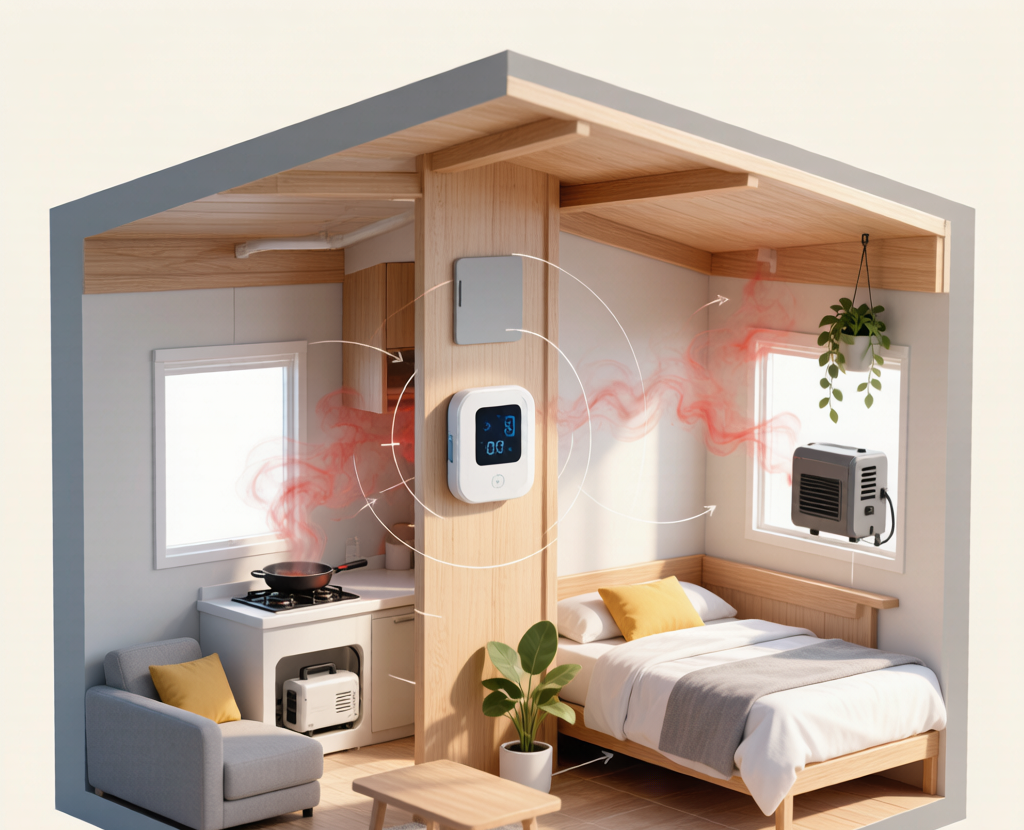
If you live, travel, or weekend in an RV, a carbon monoxide detector is not optional — it is the single most important life-safety device in your coach after your smoke alarm. Carbon monoxide (CO) is invisible, odorless, and deadly. In an RV, the sources are everywhere: the furnace, the water heater, the propane stove, the generator, even a nearby running vehicle.
This guide covers why RVs are uniquely dangerous, what features actually matter when you shop, where to mount your detector, and how a modern 6-in-1 smart detector (CO + gas + smoke + temp + humidity + digital readout) outperforms the old "beep and hope" pucks most RVers still rely on.
Why RVs Are Especially Dangerous for CO Poisoning
A typical house is large, well ventilated, and has isolated utility rooms. An RV is the opposite:
- Tight, enclosed space. A 25-foot trailer holds the same air you breathe, and CO builds up fast.
- Multiple combustion appliances. Furnace, oven, water heater, and generator can all produce CO if anything is even slightly off.
- Propane everywhere. A propane leak that never ignites is still a hazard, and a poorly tuned burner makes CO.
- Shared walls with the road. Exhaust from your own tow vehicle or a neighboring rig can drift straight into a cracked window.
- Altitude and weather. Cold mornings mean the furnace runs all night — exactly when everyone is asleep and most vulnerable.
The CDC estimates hundreds of deaths and tens of thousands of ER visits from CO poisoning every year in the U.S. In an RV, the concentration rises quicker and the warning signs (headache, nausea, confusion) are easy to mistake for "just tired from the drive."
What Makes a Good RV Carbon Monoxide Detector?
Not all detectors are equal. When you shop for an RV carbon monoxide detector, look for these six things:
1. Real CO sensing (electrochemical)
The reliable standard is an electrochemical sensor. Avoid cheap "biometric" or single-use tabs that only react after damage is done.
2. Propane / natural gas leak detection
CO is only half the risk in an RV. A propane gas leak detector catches fuel leaks before they become explosions. A combined unit saves wall space and battery.
3. Smoke detection
A 3-in-1 unit (CO + gas + smoke) covers the three biggest RV fire and poison risks in one device.
4. A digital display with real-time PPM
A unit that only beeps leaves you guessing. A digital CO detector with temperature and humidity shows the actual parts-per-million reading, so you can see a problem forming instead of waiting for the alarm.
5. Plug-in with battery backup
Power in an RV is messy — shore power, inverter, battery, generator. A plug-in CO detector with battery backup keeps watching through brownouts, disconnects, and overnight boondocking.
6. Certification you can trust
Look for UL 2034 (CO alarms), UL 1484 (gas detectors), and UL 217 (smoke alarms) compliance — the three key U.S. safety standards for this class of detector. Devices tested to these standards were actually verified to rigorous requirements, not just assembled.
The 6-in-1 VASAIKO Smart Detector
The VASAIKO 6-in-1 Smart Detector is built for exactly this use case. It combines:
- Carbon monoxide detection (electrochemical, real-time PPM)
- Combustible gas / propane leak detection
- Smoke detection
- Temperature reading on the digital display
- Humidity reading on the digital display
- Plug-in with battery backup, plus magnetic mount for RVs, campers, and home
The digital screen shows live CO levels, temperature, and humidity at a glance — so a new parent, a full-time RVer, or a cabin owner can actually *see* the air quality instead of wondering. It is tested to UL 2034, UL 1484 & UL 217 safety standards and ships free to the U.S.
Why does the temperature & humidity readout actually matter day to day? We cover that in detail in our guide: Why Your Carbon Monoxide Detector Should Also Show Temperature & Humidity.
Where to Install Your RV CO Detector
Placement matters as much as the device:
- Near sleeping areas. CO is most dangerous at night. Mount it where it can wake you — within earshot of the beds.
- At breathing height. Roughly 4–6 feet off the floor is a good rule; follow the manual.
- Not above the stove or furnace. Cooking steam and direct appliance exhaust cause false alarms and sensor wear.
- Away from vents and direct drafts. Airflow can delay detection.
- One per living zone. In a longer rig, add a second unit mid-coach.
For RV use, the magnetic mount is a genuine advantage: you can move the detector between the coach and a towed vehicle, or relocate it after a remodel, without drilling new holes.
Maintenance and Battery Backup
A detector you forget about is a detector that fails. Keep these habits:
- Test the alarm monthly with the test button.
- Check the display regularly — a live PPM reading that responds to a little exhaled breath (or a brief propane whiff near a stove) tells you the sensor is alive.
- Replace per the schedule. Electrochemical sensors age; most need replacement every 5–10 years. The VASAIKO unit's battery backup keeps it running through power loss, but the sensor still has a lifespan.
- Keep it plugged in. The battery backup is for outages, not daily use — leave it on shore or inverter power when available.
RV CO Detector Laws and Standards
In the U.S., most states require CO alarms in rental and some recreational dwellings; RV manufacturers increasingly ship with them as standard. The key certification to look for is UL 2034 for carbon monoxide alarms. Even where not legally required, insurers and campgrounds increasingly expect one, and the safety case is overwhelming.
If you are buying a used RV or one built before CO alarms were common, assume it has none or that the old one is expired — and install a fresh, properly tested unit yourself.
Frequently Asked Questions
Do I really need a CO detector in an RV if I have a smoke alarm?
Yes. A smoke alarm detects fire particles; it does not detect CO gas. They protect against different threats and you need both.
Can one device do CO, gas, and smoke?
Yes. A 3-in-1 (and in VASAIKO's case, a 6-in-1 with temp/humidity and a digital display) covers all three in a single mounted unit.
Will it work when I'm boondocking off-grid?
With battery backup, yes — the VASAIKO plug-in unit keeps monitoring through power loss as long as the backup cell is charged.
How is this different from the little puck my RV came with?
Most factory units are basic beep-only alarms with no readout. A digital smart detector shows live PPM, temperature, and humidity, and adds gas-leak and (in combined models) smoke sensing.
Is it safety-certified?
The VASAIKO 6-in-1 is tested to UL 2034 (CO), UL 1484 (gas) and UL 217 (smoke) standards, meeting U.S. safety requirements for residential and recreational use.
Stay Safe on Every Trip
Carbon monoxide does not care how careful you are — it cares whether you can *see* it coming. A modern RV carbon monoxide detector with a live digital readout, gas-leak sensing, and battery backup turns a guessing game into a monitored, visible safety system.
👉 Shop the VASAIKO 6-in-1 Smart Detector → Free U.S. shipping. Tested to UL 2034 / UL 1484 / UL 217 standards; CE & FCC certified. Plug-in with battery backup and magnetic mount for RV, camper, home, and cabin.
Protect Your Family — Shop VASAIKO HD16
Real-time CO, natural gas & smoke monitoring with a live digital display. Trusted by 50,000+ US families. Free shipping & a 2-year warranty, plus a 5-year sensor life.
Shop the 6-in-1 Guardian — $39.99Related Safety Guides
- RV Propane Detector: Why Your Camper Needs One in 2026 (Propane Leak Safety Guide)
- Do You Need a Gas Detector in Your House? (2026 Safety Guide)
- Garage Carbon Monoxide Detector: Why Your Attached Garage Needs One (2026)
- Kitchen Gas Leak Alarm: Why Your Stove Needs One in 2026
- Why Your Carbon Monoxide Detector Should Also Show Temperature & Humidity