
Why Your Carbon Monoxide Detector Should Also Show Temperature & Humidity
Most carbon monoxide detectors do exactly one thing: sound an alarm when CO reaches a dangerous concentration. That single-purpose design has saved lives — but it leaves you without any reading of what is happening *before* the alarm goes off. A modern carbon monoxide detector with temperature and humidity on a digital display changes that. Instead of guessing, you can actually *see* the air your family is breathing. For the wider case for a readable screen — why a live ppm number beats waiting for a siren — see our guide to a carbon monoxide detector with a digital display.
This article explains what a temperature and humidity readout adds, why it makes a detector genuinely safer, and how a combined 6-in-1 smart unit (CO + gas + smoke + temp + humidity + digital screen) outperforms a basic puck for homes, cabins, and RVs alike.
What "Temperature & Humidity" Actually Means on a CO Detector
When a detector advertises temperature and humidity, it means the device has a small digital screen that shows live environmental readings alongside the CO level:
- CO (PPM): the real-time carbon monoxide concentration in parts per million.
- Temperature: the ambient room temperature at the device.
- Humidity: the relative humidity percentage near the device.
A basic alarm hides all of this behind a single LED. A digital unit puts the numbers in front of you, so a slow drift toward danger is visible *hours* before it becomes an emergency.
Why a Live Digital Readout Beats a Beep-Only Alarm
A beep-only alarm gives you two states: quiet, or screaming. That is a narrow view of safety. A smart CO detector digital readout gives you a third, critical state — *awareness*:
- You see trends, not just thresholds. CO can rise gradually from a poorly tuned furnace. A readout shows the climb; a puck stays silent until it crosses the line.
- You can verify the sensor is alive. A live number that responds to your breath or a brief cooking whiff confirms the device is working — no more "is this thing even on?" anxiety.
- You build trust with the whole household. Kids, guests, and older family members understand a number on a screen faster than a mysterious LED.
Humidity Matters More Than You Think
Humidity is not a gimmick on a safety device — it is an early-warning signal for problems that eventually become health or structural issues:
- Mold and mildew. Persistent humidity above roughly 60% encourages mold growth, especially in basements, bathrooms, and crawl spaces.
- Condensation and rot. High humidity near windows, in cabinets, or behind furniture leads to warping and slow water damage.
- RV and cabin living. A parked camper or a seasonal cabin swings between bone-dry and damp fast. A humidity readout tells you when to run a dehumidifier or crack a vent.
- Breathing comfort. Dry air aggravates allergies and skin; damp air aggravates asthma. A number helps you act instead of guessing.
In short, the humidity display turns your detector into a small, always-on air-quality gauge — useful long before any gas is present.
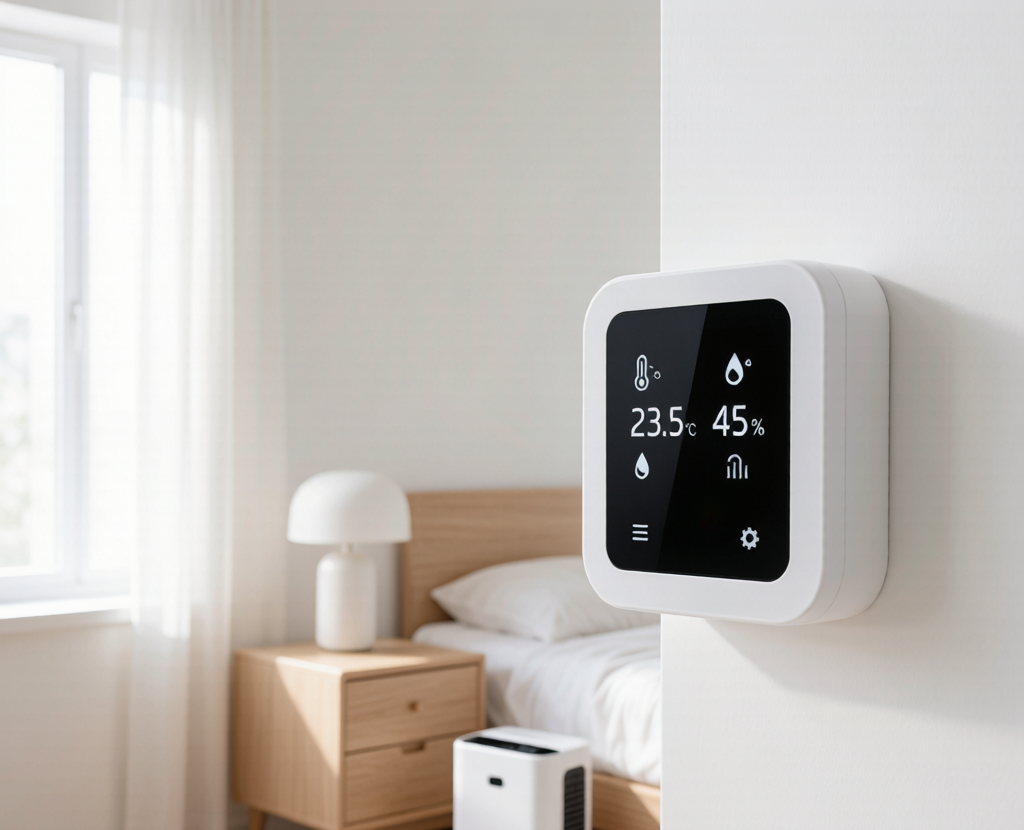
Temperature Readings Catch Problems Early
The temperature number does quiet work too:
- Frozen pipes. A sudden drop toward freezing in a basement or unheated room is a plumbing disaster waiting to happen. A temperature readout flags it.
- Overheating appliances. An attic, utility closet, or laundry area running hot can signal a struggling device.
- Furnace cycling. If the area near your furnace swings harder than normal, that is worth a look — and a readout makes the pattern obvious.
- Comfort and safety overlap. The same device that watches for danger also tells you when a room is simply uncomfortable.
CO + Gas + Smoke + Temp + Humidity = One Device, One Wall
The strongest reason to upgrade is consolidation. A home faces several air threats at once: carbon monoxide, combustible gas leaks, smoke, and the damp or temperature conditions that breed long-term problems. Mounting four separate gadgets is expensive, ugly, and easy to forget.
The VASAIKO 6-in-1 Smart Detector combines all of them in a single wall-mounted unit:
- Carbon monoxide detection (electrochemical, live PPM on screen)
- Combustible gas / propane leak detection
- Smoke detection
- Temperature reading on the digital display
- Humidity reading on the digital display
- Plug-in with battery backup, plus a magnetic mount for homes, RVs, cabins, and garages
One device watches for the acute dangers (CO, gas, smoke) and the slow ones (damp, temperature swings) at the same time. For a deeper look at RV-specific risks, see our complete RV carbon monoxide detector guide.
How to Read Your Detector's Screen
A digital display is only useful if you know what the numbers mean:
- CO near 0 PPM: normal. Small brief bumps when cooking or idling a car nearby are usually not emergencies, but watch the trend.
- CO climbing and holding: ventilate immediately, leave the area if it keeps rising, and call for help if anyone feels symptoms (headache, nausea, dizziness).
- Humidity 30–50%: the comfortable, mold-resistant zone for most homes.
- Humidity above ~60%: consider ventilation, a dehumidifier, or fixing a leak source.
- Temperature: mainly a sanity check for the room; use it to catch freezes or hot spots early.
The point is not to become an expert — it is to have *enough* information to act calmly instead of reacting to a sudden alarm.
Where to Install a Display Detector
Placement follows the same rules as any CO alarm, with one extra note for the screen:
- Near sleeping areas. CO is most dangerous at night; mount within earshot of beds.
- At breathing height. Roughly 4–6 feet off the floor is a good rule; follow the manual.
- Not above the stove or in the direct path of a vent. Steam and drafts cause false readings and wear the sensor.
- Somewhere you will actually glance at it. The value of a display is lost if it faces a wall in a closet.
- One per living zone. Longer homes or multi-level layouts benefit from a second unit.
For renters, RVs, or anyone avoiding new holes, a magnetic mount is a real advantage — relocate the detector without tools.
Frequently Asked Questions
Why does my CO detector show temperature and humidity?
Because the device includes environmental sensors alongside the CO sensor. The readings give you early context — damp, freeze risk, or a climbing CO trend — instead of just a silent-then-screaming alarm.
Is a humidity display just a gimmick?
No. Sustained high humidity drives mold and rot, and it is a useful signal in basements, bathrooms, cabins, and RVs. It effectively turns the detector into a basic air-quality monitor.
Can one device really do CO, gas, and smoke?
Yes. Combined units (3-in-1 and, in VASAIKO's case, a 6-in-1 with temp/humidity and a digital readout) cover the major air threats in a single mounted device.
Do I still need to test it monthly?
Yes. Press the test button monthly, glance at the live readout to confirm the sensor is alive, and replace the unit per its lifespan (most electrochemical sensors last 5–10 years). The battery backup keeps it running through outages, but the sensor still ages.
Will it work during a power outage?
A plug-in unit with battery backup keeps monitoring through brownouts and disconnects as long as the backup cell is charged.
See the Air, Don't Just Hear It
Carbon monoxide is invisible and odorless — but that does not mean you have to stay blind to it. A carbon monoxide detector with temperature and humidity turns a guessing game into a monitored, visible safety system: live CO levels, damp warnings, and freeze alerts, all on one screen.
👉 Shop the VASAIKO 6-in-1 Smart Detector → Free U.S. shipping. Tested to UL 2034 / UL 1484 / UL 217 standards; CE & FCC certified. Plug-in with battery backup and magnetic mount for home, RV, cabin, and garage.
Protect Your Family — Shop VASAIKO HD16
Real-time CO, natural gas & smoke monitoring with a live digital display. Trusted by 50,000+ US families. Free shipping & a 2-year warranty, plus a 5-year sensor life.
Shop the 6-in-1 Guardian — $39.99Related Safety Guides
- RV Propane Detector: Why Your Camper Needs One in 2026 (Propane Leak Safety Guide)
- Do You Need a Gas Detector in Your House? (2026 Safety Guide)
- Garage Carbon Monoxide Detector: Why Your Attached Garage Needs One (2026)
- Kitchen Gas Leak Alarm: Why Your Stove Needs One in 2026
- The Complete RV Carbon Monoxide Detector Guide (2026)