
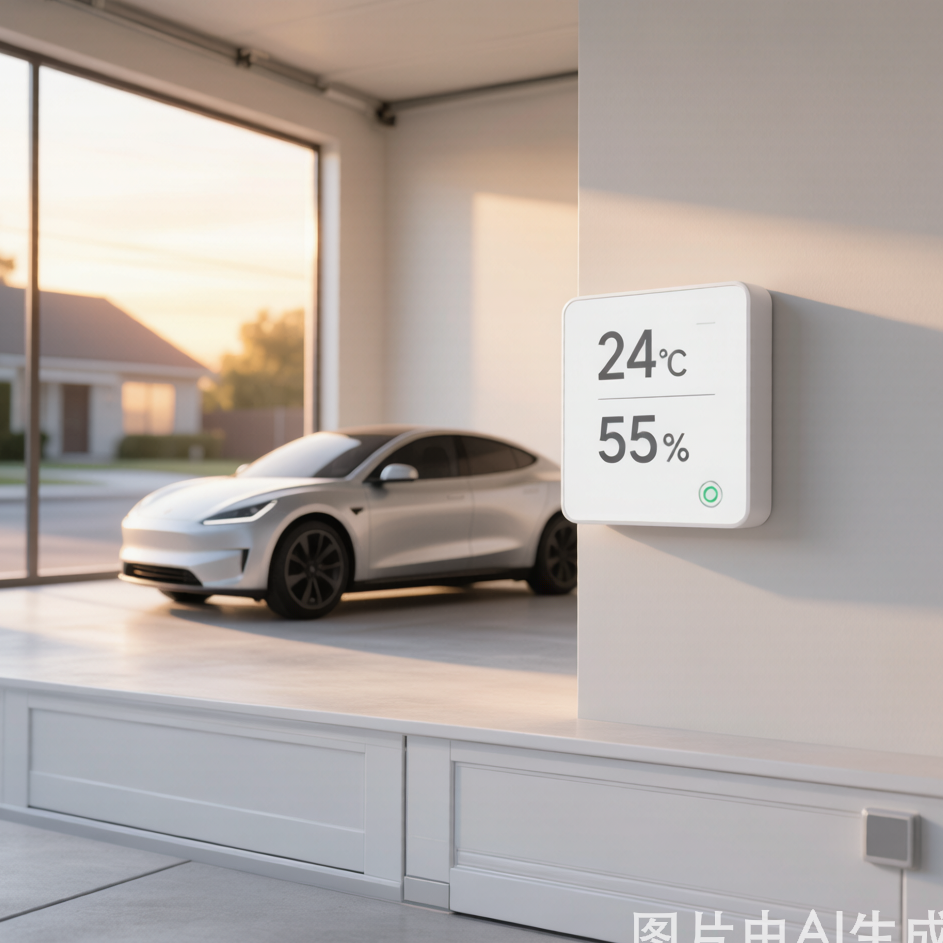
Most homeowners put CO alarms in bedrooms and living rooms — but the garage is usually where carbon monoxide enters the home *first*. If you have an attached garage, a dedicated garage carbon monoxide detector is one of the highest-leverage safety upgrades you can make, and it is also one of the most overlooked.
Why the garage is a carbon monoxide hotspot
Carbon monoxide is colorless, odorless, and produced whenever fuel burns. A garage concentrates several common sources:
- A running or idling vehicle. Even a cold start with the door closed can push CO to dangerous levels within minutes. Many poisonings happen during a "quick" warm-up or while pulling a car in and out.
- Combustion appliances. Water heaters, furnaces, and freezers with small engines are often parked in the garage.
- Exhaust drift. A few seconds of idling near the house, or a blocked exterior vent, can let exhaust wander toward living spaces instead of dissipating outdoors.
A carbon monoxide detector for garage use is built to catch these sources early — before the gas migrates into the rooms where your family sleeps and eats.
The attached-garage problem
A detached garage is a separate building. An attached garage shares walls, a door, and often ductwork or wiring chases with your home. That connection is exactly why CO there is so dangerous:
- CO does not stay put. It follows air-pressure differences and leaks through the shared door, gaps, and utility penetrations into the kitchen, hallway, and bedrooms.
- Health agencies consistently tie a large share of non-fire CO deaths to vehicles running in attached garages. The detector in your bedroom reacts late — only after the gas has already crossed the threshold.
This is why a CO alarm for attached garage placement belongs on the garage side of that shared wall, not just inside the house.
What to look for in a garage CO alarm
Garages are harsh, busy spaces, so the right detector is different from a bedroom unit. Prioritize these features:
- Flexible mounting. Garage walls are crowded with shelving, tools, and hoses. A compact detector with a magnetic mount or simple screw plate saves space and avoids drilling into finished surfaces.
- Temperature & humidity readout. Garages swing from freezing to sweltering. A sensor that shows live temperature and humidity helps you spot damp, frozen-pipe risk, or heat stress on stored items. (Note: the temp/humidity display is an added convenience reading, not part of the CO safety certification.)
- Combined gas + CO sensing. Many garages also store gasoline cans, propane tanks, and paint thinners. A 6-in-1 unit that senses natural gas and propane leaks *and* smoke *and* CO covers more of the real risks in one device.
- Battery backup. Power outages still need protection, especially in winter when heating equipment misbehaves.
- Standards. Look for devices tested to UL 2034 for CO, UL 1484 for combustible gas, and UL 217 for smoke, and that are CE & FCC certified for the markets they ship to.
Where to install a carbon monoxide detector in the garage
Placement matters as much as the device itself:
- Mount it on the wall near the door to the house, roughly 5 feet above the floor in the breathing zone — that is the path CO takes into living areas.
- Keep it away from the direct exhaust pipe and away from dead-air corners where air never circulates.
- Avoid spots right above a running engine or next to a heat vent, where false readings or sensor stress are more likely.
- If you have an attached garage, add a second alarm on the *inside* of the shared wall, so you get an early warning in the home as well.
Testing and maintenance
A detector only protects you if it works:
- Test monthly with the test button.
- Replace batteries on schedule, and replace the whole unit every 7–10 years per the manufacturer.
- Never ignore chirps or end-of-life warnings — they mean the device needs attention now.
Related reading
- The Complete RV Carbon Monoxide Detector Guide (2026)
- Why Your Carbon Monoxide Detector Should Also Show Temperature & Humidity
- Kitchen Gas Leak Alarm: Why Your Stove Needs One in 2026
Protect the garage and the home together
The VASAIKO HD16 is a 6-in-1 smart detector that combines carbon monoxide, natural gas, propane, and smoke sensing with a live temperature and humidity display, a digital readout, a magnetic mount, and battery backup. It is built to watch your garage and your living space from one compact device. See how it fits your setup on our HD16 safety detector page.
Protect Your Family — Shop VASAIKO HD16
Real-time CO, natural gas & smoke monitoring with a live digital display. Trusted by 50,000+ US families. Free shipping & a 2-year warranty, plus a 5-year sensor life.
Shop the 6-in-1 Guardian — $39.99Related Safety Guides
- RV Propane Detector: Why Your Camper Needs One in 2026 (Propane Leak Safety Guide)
- Do You Need a Gas Detector in Your House? (2026 Safety Guide)
- Kitchen Gas Leak Alarm: Why Your Stove Needs One in 2026
- Why Your Carbon Monoxide Detector Should Also Show Temperature & Humidity
- The Complete RV Carbon Monoxide Detector Guide (2026)