
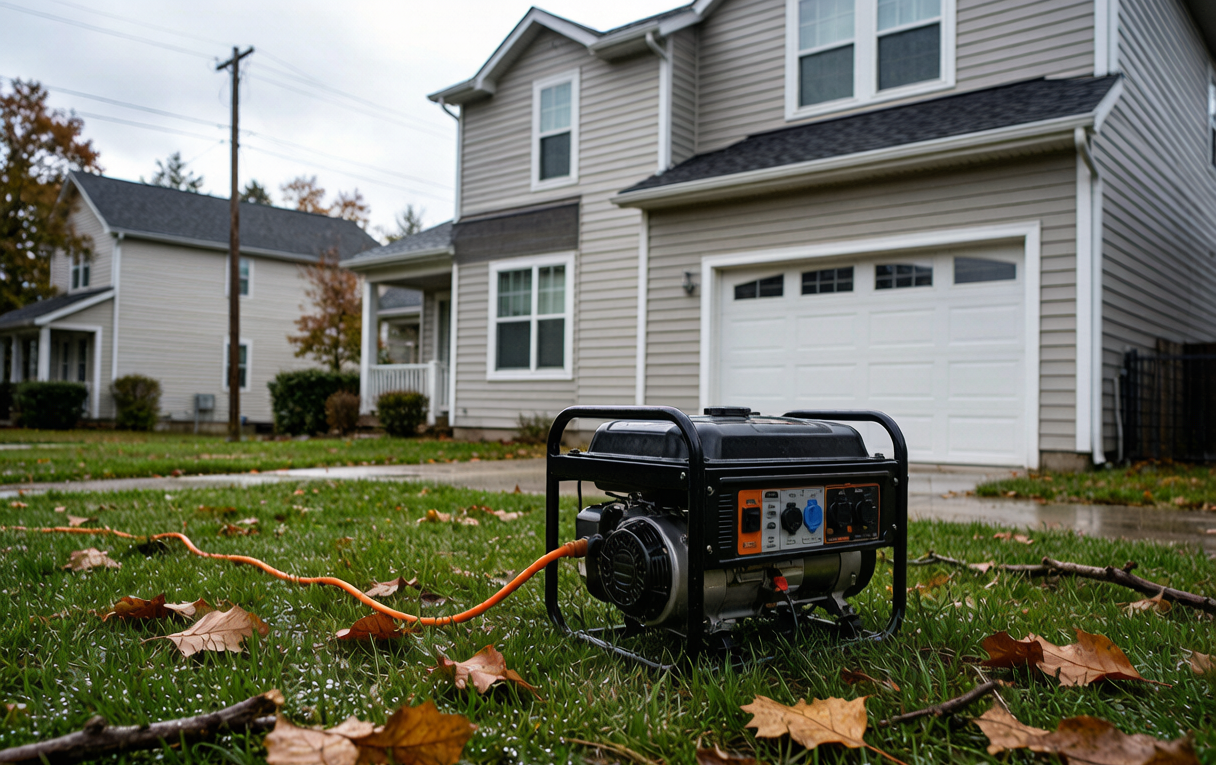
A portable generator is one of the most useful tools during a power outage, and also one of the most dangerous. Every year, emergency rooms see cases of generator-related carbon monoxide poisoning after storms, often from households that thought the unit was "far enough" from the house.
This guide covers the safe placement distance, why indoor or garage use is never acceptable, the warning signs of CO poisoning, and the one backup device that can catch what your eyes and nose cannot.
Why generators produce carbon monoxide so fast
A gasoline, propane, or diesel generator burns fuel to spin an engine and create electricity. Any fuel-burning engine that runs without complete combustion produces carbon monoxide. The exhaust leaves the generator at high concentration, and because CO is slightly lighter than air, it mixes quickly with the surrounding atmosphere and can drift toward open windows, vents, doors, and even soffit vents.
Common mistakes that turn a helpful generator into a lethal source:
- Running it in a garage, even with the door open
- Placing it under a window or near an air intake
- Pointing the exhaust toward the house
- Assuming a covered porch or carport provides "outdoor" ventilation
- Letting it run overnight while everyone sleeps
The gas is colorless and odorless. You cannot see it, smell it, or taste it.
How far should a generator be from the house?
Major safety organizations recommend a minimum of 20 feet (6 meters) from the house, with the exhaust pointed away from any windows, doors, vents, or occupied spaces.
For most single-family homes, 20–30 feet is the practical sweet spot. At this distance, exhaust has enough space to dilute before it reaches the building envelope. Closer than 20 feet, concentrations can still rise enough to enter the home, especially if the wind is blowing toward the house.
Additional placement rules:
| Factor | Safe practice |
|---|---|
| Surface | Dry, level ground or a concrete pad |
| Overhead | Open air; no carports, garages, or enclosed porches |
| Exhaust direction | Point away from the house and any neighboring structures |
| Extension cords | Heavy-duty outdoor-rated cords; keep them out of standing water |
| Weather protection | Use a manufacturer-approved generator tent or canopy; never a regular tarp in an enclosed space |
If you live in an apartment, townhouse, or any structure without a safe outdoor distance, a portable generator is usually not the right backup power solution. Look into battery-based power stations instead.
Never run a generator indoors or in an attached garage
This cannot be overstated. An attached garage shares air with the rest of the house, even when the overhead door is open. Running a generator inside an attached garage has caused fatal poisonings because CO seeps through wall gaps, door frames, and HVAC return pathways.
The same applies to:
- Basements and crawl spaces
- Sheds and outbuildings with poor airflow
- Covered patios with three or more walls
- Tents, RVs, or enclosed awnings with the generator inside
If your generator is loud and you want to dampen the sound, use sound-dampening fencing placed at least 3–5 feet from the exhaust side, not a roof or tarp that traps gases.
Carbon monoxide poisoning symptoms: what to watch for
CO poisoning is often mistaken for the flu, food poisoning, or simple fatigue because the symptoms build gradually and vary by concentration.
Early symptoms at low-to-moderate exposure:
- Headache
- Dizziness
- Weakness
- Nausea
- Shortness of breath
- Confusion or difficulty concentrating
Severe symptoms at higher exposure:
- Chest pain
- Vomiting
- Loss of coordination
- Blurred vision
- Loss of consciousness
- Seizures
Children, older adults, pregnant women, and anyone with heart or lung conditions are more vulnerable. Pets can also be early warning indicators because smaller animals feel the effects sooner.
If you suspect CO poisoning, turn off the generator immediately, move everyone to fresh air, and call emergency services. Do not re-enter the building until it has been ventilated and inspected.
A CO detector is the last line of defense
Proper placement and outdoor operation are your first two lines of defense. A carbon monoxide detector is the third. If wind direction changes, an exhaust pipe shifts, or someone accidentally moves the generator closer to the house while you sleep, a detector is the only thing that will wake you up.
For generator safety specifically, the best protection comes from:
- Bedroom-level coverage: A detector within 10 feet of sleeping areas, because symptoms progress while you are unconscious.
- Living area coverage: Near the living room or hallway closest to the garage if you run a generator in the driveway.
- Digital PPM readout: Lets you see trends, not just alarms. A reading of 35 PPM over time is actionable; a single threshold alarm is often too late.
- Battery backup: Power outages are exactly when generators run. A detector that plugs in but also runs on battery stays on when circuits fail.
Combination detectors that sense both carbon monoxide and combustible gas add another layer, because a fuel spill, leaking propane connection, or natural gas line rupture during a storm can create a separate explosion risk.
Pre-storm generator safety checklist
Before the next outage, run through this checklist once:
- Confirm you have a safe outdoor spot at least 20 feet from all openings.
- Stock a heavy-duty outdoor-rated extension cord long enough to reach that spot.
- Test your carbon monoxide detectors and check expiration dates.
- Locate the exhaust outlet and practice pointing it away from the house.
- Have a plan for refueling safely while the unit is off and cool.
- Make sure everyone in the home knows the symptoms of CO poisoning.
- Keep emergency numbers saved in your phone.
Storms are high-stress moments. Decisions made in the dark and rain are usually worse than decisions made in daylight with a written plan.
Why a 6-in-1 detector fits generator safety well
A home gas leak detector that also senses carbon monoxide, smoke, temperature, and humidity gives you complete coverage for the risks a generator introduces. Carbon monoxide from exhaust, combustible gas from fuel spills, smoke from overheating extension cords, and temperature shifts in rooms near the garage are all tracked in one device.
The VASAIKO HD16 is tested to UL 2034, UL 1484, and UL 217 standards, CE & FCC certified, and RoHS compliant. It plugs into standard AC power with a built-in battery backup, so it keeps working during an outage. The digital display shows live PPM readings, which is useful when you are trying to decide whether a faint headache is stress or an actual CO trend.
If you are running a generator this season, treat the detector as part of the same purchase decision as the extension cord and fuel cans.
Common questions
Can I run a generator on a balcony?
Only if the balcony is open on all sides, the exhaust points away from the building, and local fire codes allow it. Enclosed balconies are not safe.
Will opening windows make indoor generator use safe?
No. Opening windows does not create enough airflow to clear CO from a running generator indoors. The gas can still build to lethal levels in minutes.
How long does it take to get CO poisoning from a generator?
Symptoms can begin in minutes in an enclosed space. Outdoors near a house, the risk is lower but not zero if the unit is too close or pointed the wrong way.
Do I need a detector if I never run a generator indoors?
Yes. Furnaces, water heaters, fireplaces, vehicles left running in attached garages, and neighboring properties can all produce CO. A detector is not just for generator use.
What does the beep pattern mean?
Four rapid beeps followed by a pause is the standard CO alarm pattern. A single chirp every 30–60 seconds usually means low battery or end-of-life. Learn the exact pattern of your detector before you need it.
Final takeaway
Generator safety comes down to three non-negotiable rules: keep it outdoors, keep it at least 20 feet from the house with the exhaust pointed away, and install a carbon monoxide detector with battery backup where you sleep. No amount of convenience is worth the risk of running a generator too close to your home.
Before storm season peaks, test your detector, clear your placement spot, and make sure everyone in the household knows the symptoms of carbon monoxide poisoning.